
ISBN: 9780593855874
Publisher: Dutton Books for Young Readers, 2025
Genre/format: historical fiction/contemporary, verse/prose
Awards: none
Reading level: grade 9+, SLJ
Plot summary:
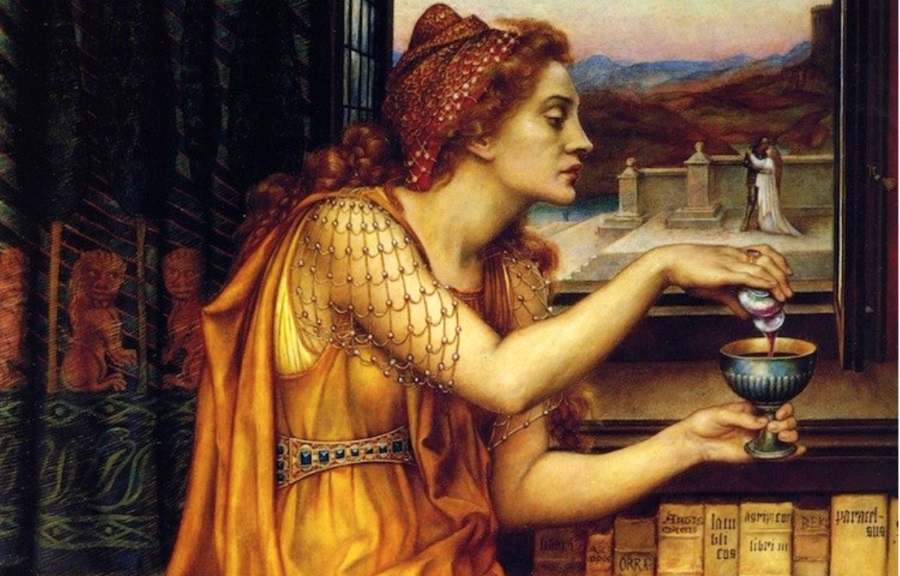
17th century Rome… inspired by the real life of Giulia Tofana, famed murderess of men:
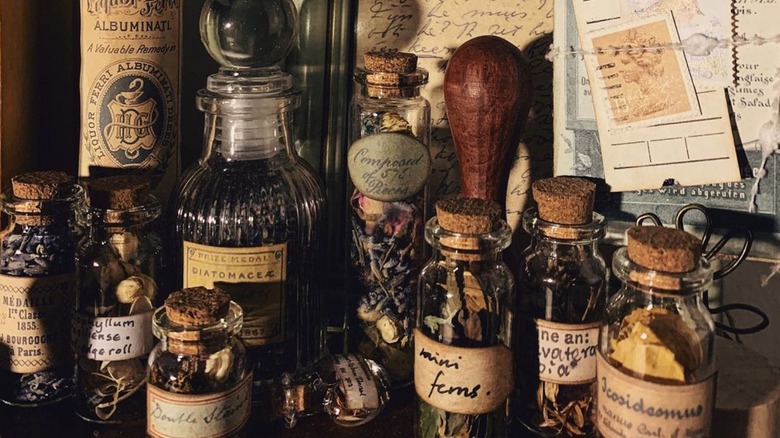
Carmela Tofana’s mother promised her that on her sixteenth birthday, she would finally be allowed to work in the La Tofana apothecary. When that time finally comes, Carmela is eager to get started and learn her mother’s secrets– even the ones that fundamentally change how she sees her mother and the world. The apothecary deals closely with the lives of the women in their neighborhood, from their dangerous husbands and unwanted advances to love potions and arthritis remedies. Alongside Maria and Laura, two of the apothecary assistants that have practically raised Carmela, she studies the science of creams and tonics, and the art of listening and solving people’s problems.
When Carmela was young, she was bullied for having a witch for a mother, and the number one perpetrator was Violetta, a girl with more privilege than her. Despite their differences, both girls realize that their society will treat them both poorly on account of their sex. After Carmela makes a mistake with a customer, leading to a witch hunt of the apothecary, she must rely on the women around her and the ones whose problems she desperately tried to help solve. The story is interspersed with verse chapters that add additional context and characters to the world and neighborhood at large, detailing all the ways that everyone suffers under the patriarchy.
Author background:

Joy McCullough is an author of YA fiction and a playwright based in Seattle, WA. Her debut novel, Blood Water Paint (2018), is a fictional biography told in verse of the painter Artemisia Gentileschi. Her fiction centers on historical women and their experiences as a marginalized group in society, where men’s wills are exerted on the voiceless. Both Blood Water Paint and Everything is Poison were originally screenplays. In an interview, McCullough mentions that she enjoys writing in verse because it’s a smooth transition from screenplays in her mind. (Morrison 2017)
“I think the verse format makes this really difficult story more accessible for readers. It’s common for people to have a perception that verse is poetry and poetry is hard. But I think those people are mentally stuck analyzing dead white guy poetry in boring English classes. The rhythm, the economy of language, and the emotional core are all aspects of verse that I believe really appeal to young readers, especially.“
–Why Verse? An Interview with Joy McCullough. Laurie Morrison.
Critical evaluation:
I was really surprised by this book, and while it does appeal to me specifically (I love anything set in Rome) I think anyone could enjoy it. One thing that really stood out to me was how McCullough takes the reader seriously and doesn’t reduce the impact and importance of what the characters and other women are going through. The verse chapters throughout the book were beautiful, and their comfortable repetition grew into a highly enjoyable part of the book.
Carmela was a well written 16 year old, and I totally understood her perspective on the injustices of the world, as well as her strong desire to hold long-lasting grudges. Throughout the book she learns how her worldview can be biased, and she starts to recognize nuanced situations instead of jumping to conclusions. This is most prominent in her enemy-to-friendship with Violetta, a former bully whose home life forces her into taking refuge at the apothecary. Their relationship felt really realistic, even if Carmella is unreceptive to Violetta’s struggles at first.
All of the verse chapters start with “There was a [girl/woman/person] like [character]. But not.” (ex. “There was a girl like Carmela. But not.”) An artful and descriptive, oftentimes heartbreaking depiction of this person’s life follows, where you start to picture the setting at large and come to understand the challenges faced by everyone, but especially women and girls. The injustices of life as a woman in 17th century Rome are a strong theme in this book. I didn’t know a huge amount about the real Giulia Tofana (in the book, Carmela’s mother) beforehand, but the book takes a sympathetic look throughout at what might have led a woman to becoming a poison distributor to rescue other women.
Creative use for a library program:
I think it would be really fun to focus on the apothecary side of this story by hosting some kind of tea-making and sampling event for teens. Not a tea party, but an exploration of what effects different ingredients can produce, and how to use different types of teas for ailments. Depending on how someone is raised, these things might be a forgotten art, and I think an event like this could appeal to the teens hungry for knowledge.
Speed-run book talk:
Carmela Tofana has been dying to find out the secrets behind the tonics, creams, and teas that La Tofana, her mother’s apothecary, brews… but she quickly learns that managing the store and helping customers is incredibly hard to pull off. Especially when those customers are her childhood tormentor! But when a very serious case presents itself at the apothecary, Carmela learns the truth: her mother concocts and distributes Aqua Tofana, an undetectable poison, to those most in need. PLUS: this is a true story, based on the infamous “murderess” Giulia Tofana…
Potential challenge issues/defense preparation:
This book is full of serious subjects, especially those in relation to domestic abuse, pregnancy, childbirth, abortion, and assault (of all kinds). The ideal reader for this book would be mature enough to handle this content, and it might unfortunately stand out to some parents as inappropriate for a teen book. I think it would make the most sense to explain what exactly is depicted on page. There is no on-page sexual content, but the results of it, such as unwanted pregnancies and difficult childbirths, are described. The main character, Carmela, learns alongside the reader how to treat ailments and take care of people, which is ultimately the goal of the apothecary. The book does not promote any actions taken in this book, but rather shows the circumstances in which someone might be pushed to make certain decisions.
Reason for inclusion:
I love reading anything set in Ancient Rome, so I was instantly drawn to this book. But it was a very surprising reading experience, and I think the messages of the story alone are worth including it. McCullough has a lot of interesting things to say about the patriarchy and the strength of women, and by placing these themes in a biographical historical context, there’s a huge connection formed between reader and character.
References
Everything Is Poison | School Library Journal
Dutton, Jan. (2025, Jan 1). Everything is Poison. School Library Journal. https://www.slj.com/review/everything-is-poison
Morrison, L. (2017, Nov 2). Why Verse? An Interview with Joy McCullough. Laurie Morrison. https://lauriemorrisonwrites.com/2017/11/verse-interview-joy-mccullough/